History thoughts · oldest to newest
A respectful walk through Paganism, Hinduism, Judaism, Buddhism, Christianity, and Islam — history stories, not sermons — and a closing thought from John J. Cannon.
These six history thoughts are offered in the order the traditions themselves began, from the oldest stories we can tell to the most recent. Each one is a history story: roots, founding, development, and spread. None of them is a judgment of anyone's faith, and none of them is a ranking. I'm not here to say which one is true. I just want to share what historians and archaeologists tell us, with respect for everyone who holds these traditions dear, and for everyone who doesn't.
Bowtieism has one commandment: Be True. Understanding this long history doesn't require any of us to give up what we hold true. It just helps us understand each other a little better.
From the first cities · a history thought
The many gods and goddesses of the ancient world — how they rose, how they faded, and how some of those ways have returned.

From the history thought
First, a word about the word itself. “Pagan” comes from the Latin paganus, which meant something like a country person, or a civilian. Early Christians used it for people who kept the old religions. The ancients themselves had no single name for their beliefs. To them, honoring the gods was simply part of life.
Our story begins in Mesopotamia, between the Tigris and Euphrates rivers, where some of the world's first cities appeared. Each city had its patron god, who lived in a great temple at its heart. At Ur, around 2100 BCE, a stepped tower called a ziggurat rose toward the heavens.
Athens built the Parthenon for Athena, completed in 438 BCE. At Delphi, people came from across the Greek world to ask questions of Apollo's oracle, at a temple inscribed with the famous words, “Know thyself.” And the Olympic Games began as a festival in honor of Zeus.

From the Indus Valley, c. 2600 BCE · a history thought
One of the oldest living religious traditions in the world: a faith with no single founder, no single holy book, and no single date when it began.
From the history thought
Unlike many faiths, it has no single founder, no single holy book, and no single date when it began.
Our story starts in the valley of the Indus River, in what is now Pakistan and northwest India. Around 2600 BCE, one of the world's first great civilizations flourished there, with planned cities like Harappa and Mohenjo-daro, which archaeologists began uncovering in the 1920s. They had straight streets, drainage systems, and a huge public bath, which some scholars think may have been used for ritual washing.
The next chapter is the Vedic age. Most historians think that, during the second millennium BCE, people speaking an early form of Sanskrit moved into northwest India, blending with the people already living there. Their sacred hymns became the Vedas, the oldest scriptures of Hinduism. The oldest of them, the Rigveda, was composed perhaps between about 1500 and 1000 BCE.
From c. 1200 BCE · a history thought
How a people in the hill country of Canaan grew, over more than three thousand years, into a faith practiced around the globe.
From the history thought
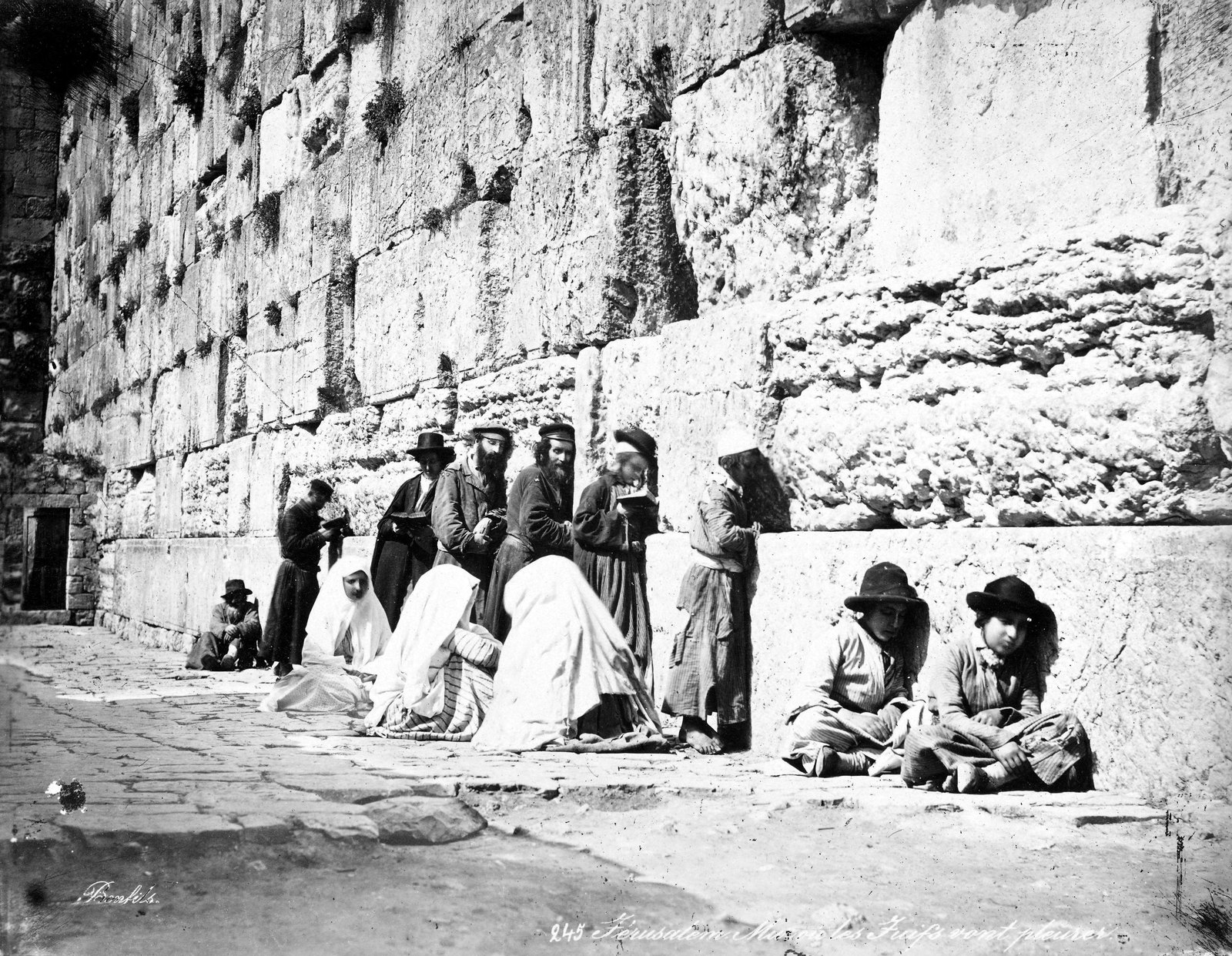
Let's start with the land. Around three thousand two hundred years ago, the eastern edge of the Mediterranean was called Canaan. It was a world of small city-states, farmers and herders, squeezed between the great powers of Egypt and Mesopotamia.
Around 1208 BCE, an Egyptian pharaoh named Merneptah set up a victory monument. Near the end of its text, it says, “Israel is laid waste, his seed is no more.” It's the earliest known mention of Israel outside the Bible, and it tells us a people called Israel already lived in the hill country of Canaan.
Most archaeologists today think early Israel grew largely out of that Canaanite world, in hundreds of small highland villages. Over time, these communities came to center their worship on the God of Israel, known by a sacred four-letter name. Jewish tradition tells the story through Abraham's covenant with God, the exodus from Egypt, and Moses receiving the Torah at Mount Sinai. Historians study how those memories took shape, while for Jews they remain the foundation of the faith.
From the 5th century BCE · a history thought
How the teachings of one wandering sage in ancient India became a tradition followed by hundreds of millions of people, from Sri Lanka to Japan, and now all over the world.
From the history thought
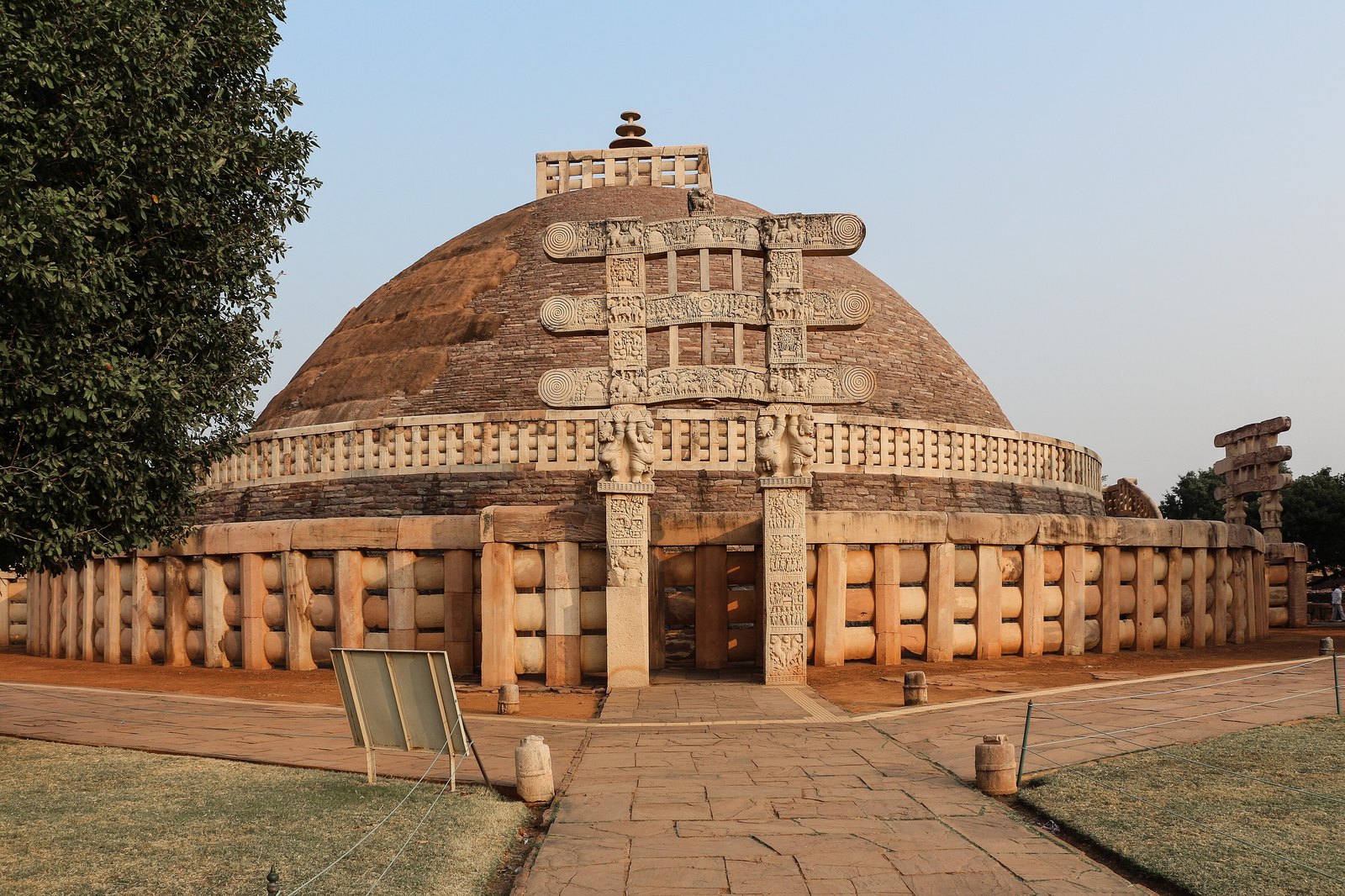
His name was Siddhartha Gautama. According to tradition, he was born in a garden at Lumbini, in what is now southern Nepal, into the Shakya clan. The old dates for his life were the sixth century BCE, but today many scholars think he probably lived in the fifth century BCE, and died around the year 400 BCE, at about the age of eighty.
The traditional story says he grew up in comfort, as a prince. Then, as a young man, he encountered old age, sickness, and death, and a wandering holy man. Shaken, he left his palace to search for the answer to suffering. For years he studied with teachers and practiced harsh self-denial, nearly starving himself. Then he gave that up, choosing a middle way between luxury and extreme hardship.
Seated beneath a fig tree at a place now called Bodh Gaya, he meditated until, according to tradition, he reached awakening. The tree became known as the Bodhi tree.
From the 1st century CE · a history thought
How a small movement in a corner of the Roman Empire grew, over centuries, into a faith practiced on every continent.
From the history thought
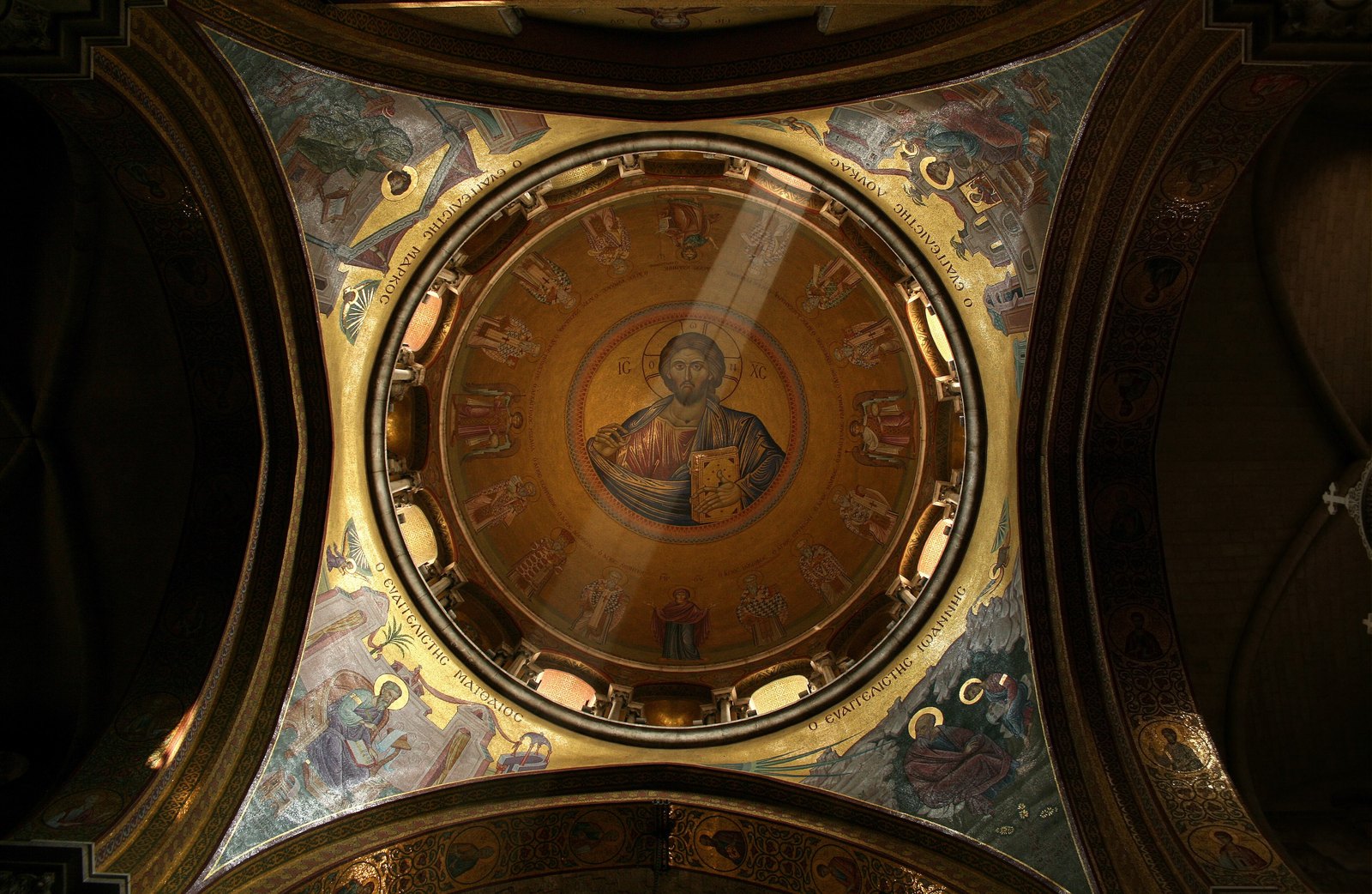
To understand where Christianity came from, we have to start with Judaism. Two thousand years ago, Judea was a Jewish land under Roman rule. The second Temple stood in Jerusalem, and Jewish life was full of lively debate.
At the center of the story is Jesus of Nazareth, a Jewish teacher from Galilee, born a few years before the Common Era. Almost all historians agree on some basic facts. He lived, he was baptized by a preacher named John, he gathered followers, and he taught about the coming Kingdom of God, often in parables, with a special concern for the poor and the outcast. And around the year 30, in Jerusalem, he was crucified on the orders of Pilate.
For Christians, that was not the end. His followers proclaimed that God had raised him from the dead, and that he was the messiah, the Christ. Historians can't test that belief, but they can see its effects. A small community formed in Jerusalem.
From the 7th century CE · a history thought
How Islam emerged from the deserts, oases, and trading towns of Arabia, and grew, over many centuries, into a faith of more than a billion people.
From the history thought
Let's start with the land itself. Arabia was never one place with one culture. In the south, in what is now Yemen, there were kingdoms with irrigated fields, stone temples, and written inscriptions. In the north were caravan cities linked to Rome and Persia. And in the middle lay the Hijaz, a region of oases and market towns, where loyalty to your tribe meant almost everything.
Around the year 610, at about forty years old, Muhammad is said to have received his first revelation, in a cave on Mount Hira, outside Mecca. For Muslims, these revelations, gathered as the Quran, are the word of God. His message called people to worship one God alone, to care for the poor and the orphan, and to remember a day of judgment.
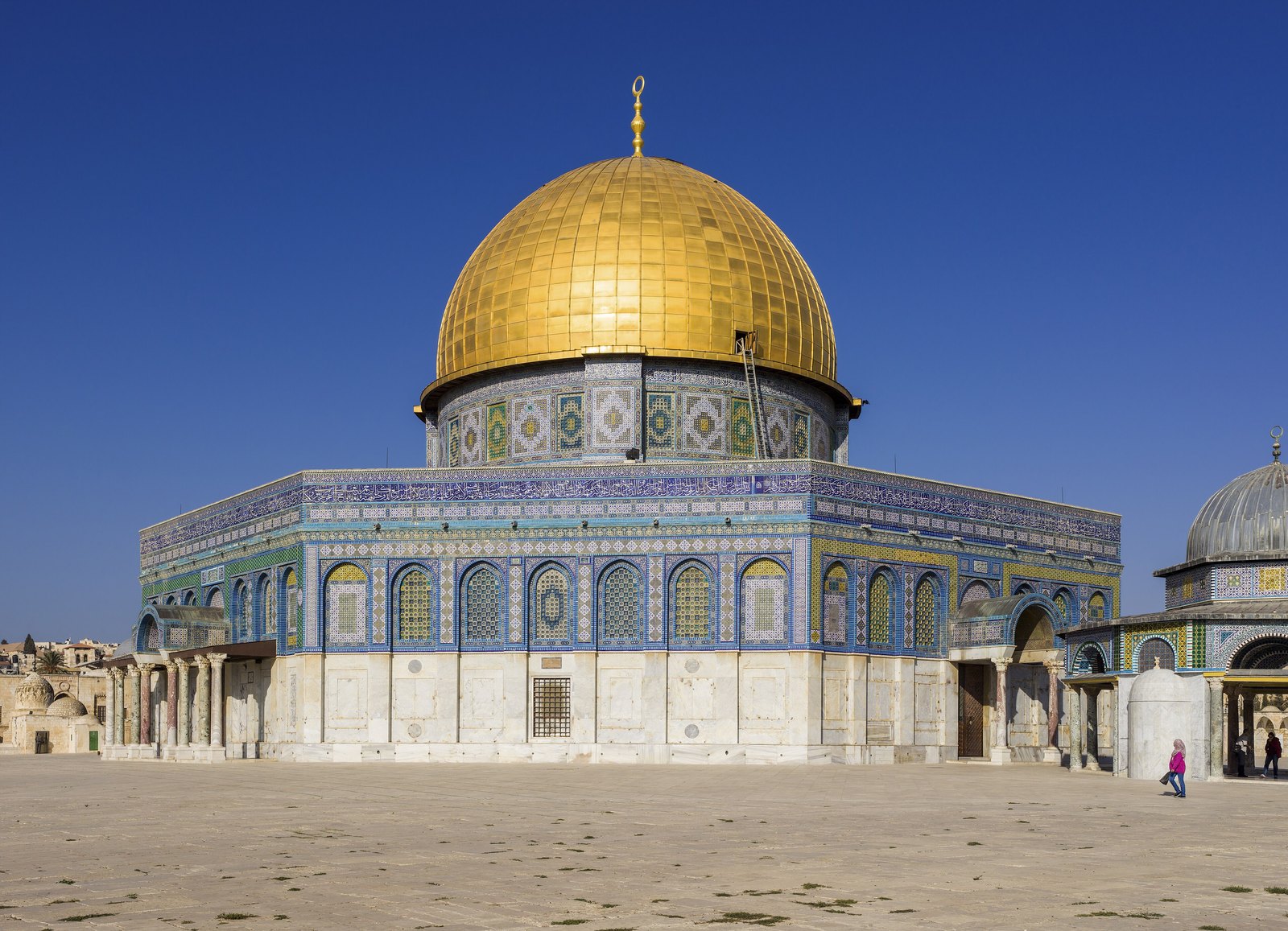
Next came the Umayyad dynasty, ruling from Damascus, from 661 to 750. Their reach stretched from Spain to Central Asia. Around 691, the caliph Abd al-Malik built the Dome of the Rock in Jerusalem. He also made Arabic the language of government, and minted coins with Arabic writing instead of images. Over time, Arabic became the language of law, of business, and of learning.
A closing thought
After these six history stories, a closing thought — from a Bowtieism “Be True” point of view — on what these traditions have given humanity over many thousands of years: shared values, art, law, community, ethics, and wonder. Respectful, and not a ranking of anyone's faith.
A note from John
When I look back on these six stories, I don't see a contest. I see a long, shared human effort to find meaning, to care for one another, and to make something beautiful and lasting.
Bowtieism has one commandment: Be True. For me, that means staying curious, being kind, and looking at the world as honestly as we can. It was never meant to replace anyone's faith, or to tell anyone to give theirs up. It is a simple invitation: be true, to yourself, and to each other.
The time to change is now. We don't have to wait to be kinder, or fairer, or more honest with one another. I've seen how people can grow joyless when they cling to beliefs that aren't true. Being true means having the courage to keep asking questions, and still choosing to be kind.
We can either choose love or hate. And we choose love.
Stay curious. Be kind. Be true.
John J. CannonFounder of Bowtieism